SUP Fins
Get grip and stability on the water with SUP fins. Steer straight and surf like a pro with added traction and control.
Extended SUP Fin Information


To learn more about which paddle board fin replacement is appropriate to buy for your inflatable paddle board, see our ISUP fin replacement page.
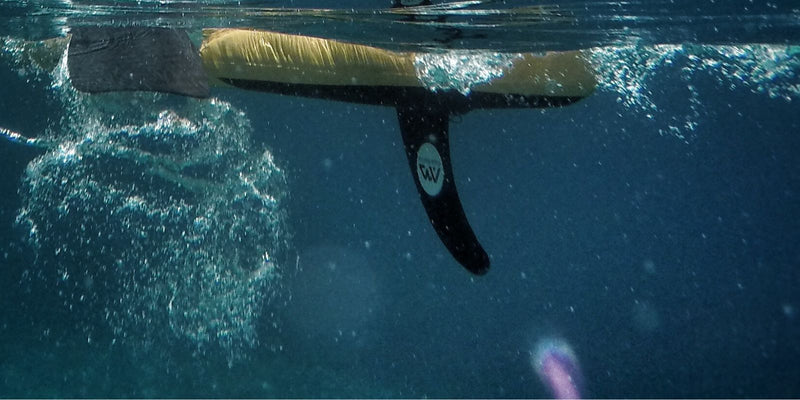
SUP fins provide stability and traction to your stand-up paddle board. Fins aid in steering and paddling in a straight direction, which allow you to stand-up paddle surf without spinning out when you turn. More fins in the water equal more traction and grip. We highly recommended that every new board should have at least one SUP board fin installed while in use.
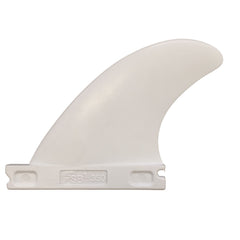
While the pros and cons of SUP fin configuration are up for debate, it’s pretty well agreed upon that a single 8-to-10-inch-long stand-up paddle racing fin is best for flat-water cruising, and a 2+1 or three-fin setup (which is a 6-to-8-inch center fin flanked by two smaller side fins) is best for stand-up paddle board wave surfing. When surfing, you really always want at least one rail and one of your SUP fins to be in the water to get better traction and more glide. When you place a paddle board fin replacement in a 2+1 setup, you will always have at least one fin in the water, providing traction while you are surfing even on the rails of the board and ensuring that your board doesn’t “slip out” and lose traction on the wave. The 2+1 setup is great because it has that strong center back fin as a pivot point for the board, making it easier to turn on waves, but still provides enough traction for wave riding with the two side fins.
The best stand-up paddle boards have a removable fin configuration that allows the user the flexibility to install paddle board fins specific to their preferences, even if that preference changes from day to day. Our direct-to-consumer paddle boards are made to allow users to experiment with different lengths of stand-up paddle board fins.
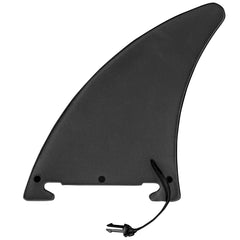
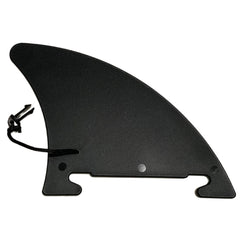
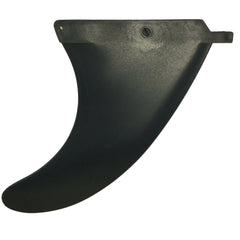
The SUP replacement hook + pin fin is our standard ISUP fin that comes as part of every ISUP order. This paddle board fin replacement latches onto our ISUP fin box by way of the attached pin, popping into place. It is an easy and versatile stand-up paddle board replacement fin that can be used on any ISUP.
The river SUP fin is good for use in shallow waters. With the height of these stand-up paddle fins being only 6 inches, you no longer will have to worry about scraping your fin on the bottom of the lake or river. What it lacks in height it makes up for in width. This SUP fin replacement is still extremely stable and provides a great sense of traction when SUP touring along the water.
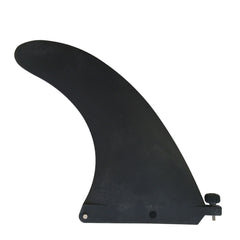
The tool-free stand-up paddleboard replacement fin is a classic hard-top stand-up paddle board fin that uses a screw and bolt to lodge and tighten the back fin into place. These SUP fins can only be used with hardtop paddle boards, not with ISUPs.