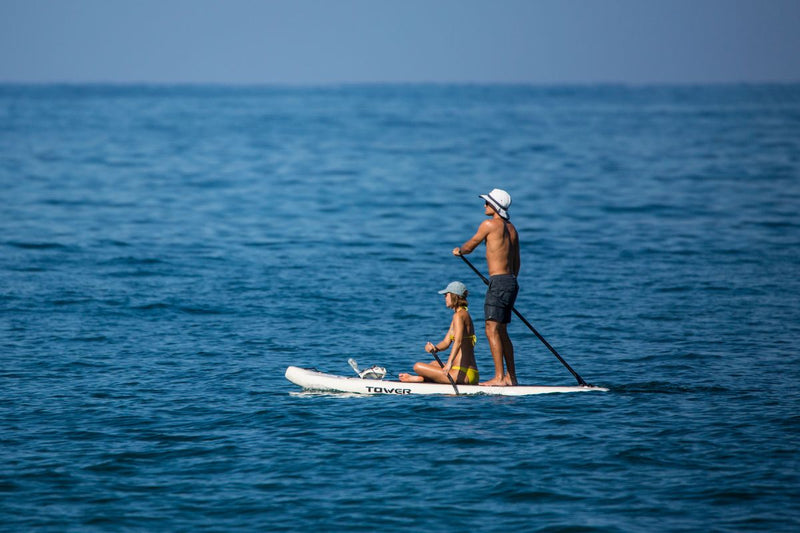
Our paddle boarding instructional video below goes over the basics of learning how to stand up paddle board. Review the video for the quick start guide to paddleboarding.
SUP Board Size
There are all different size paddle boards out there. The important thing to know is that the wider the board is the more stable it is. Length is a factor as well, but width is the critical component to SUP board stability. 32 inches wide should be plenty stable and most people can paddle fine on a 30 inch wide board. Once you start going narrower than that, it gets more challenging. Also, note the volume of the board is important to stability. In a nutshell, the more volume the more stable a board will be and the larger rider a board can support. A kid can ride pretty much any paddle board, but when you're over 200 lbs you need to get a board that has enough volume to support you to ride comfortably. If you're a taller rider, just know that Standup paddleboarding is going to be more difficult as you have a higher center of gravity. Get a bigger, wider board with more volume and you will be fine.
Stand Up Paddle Board Body Positioning
The first time you go out, it's a good idea to start in calm, flat water. Good times to try are early in the morning or in the evening when there is no wind. Before getting on the paddle board, you need to find the center point of the board. There is usually a handle in the board and that will be at the center point between the front tip and the rear tail of the board. That's where you want to also center you weight over when standing on the board. While you'll start out on your knees, pretty quickly you'll jump up to your feet and they should be a shoulder's width apart centered on that handle for best balance.
Once you are standing, you will want your knees to be bended slightly. To learn the muscle memory required to balance, you can practice rocking the board side to side by moving you weight. This is the counter-balancing motion that you need to learn to balance. It takes about 30 minutes to find your balance and to get the muscle memory. It feels really tipsy at first, but in no time you’ll be very comfortable and able to take small waves from all directions without falling.
Paddling Forward
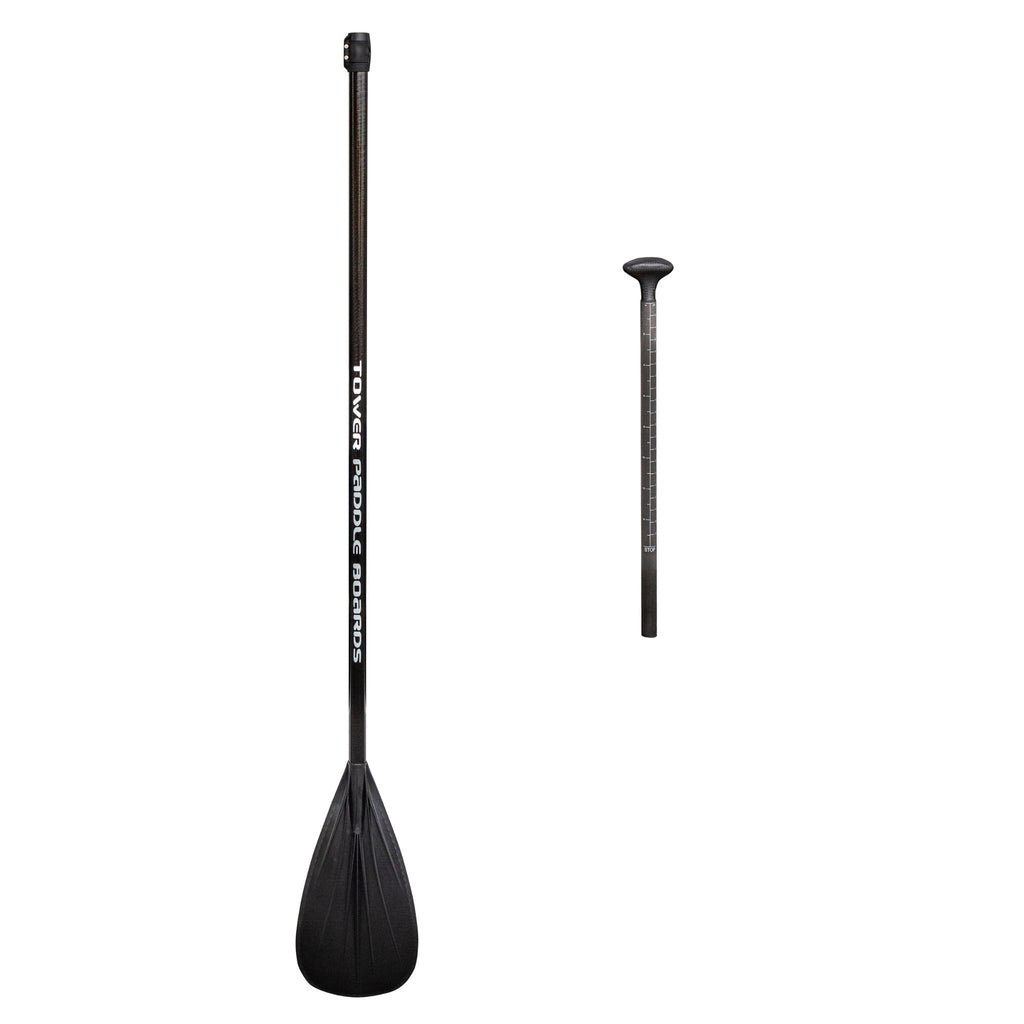
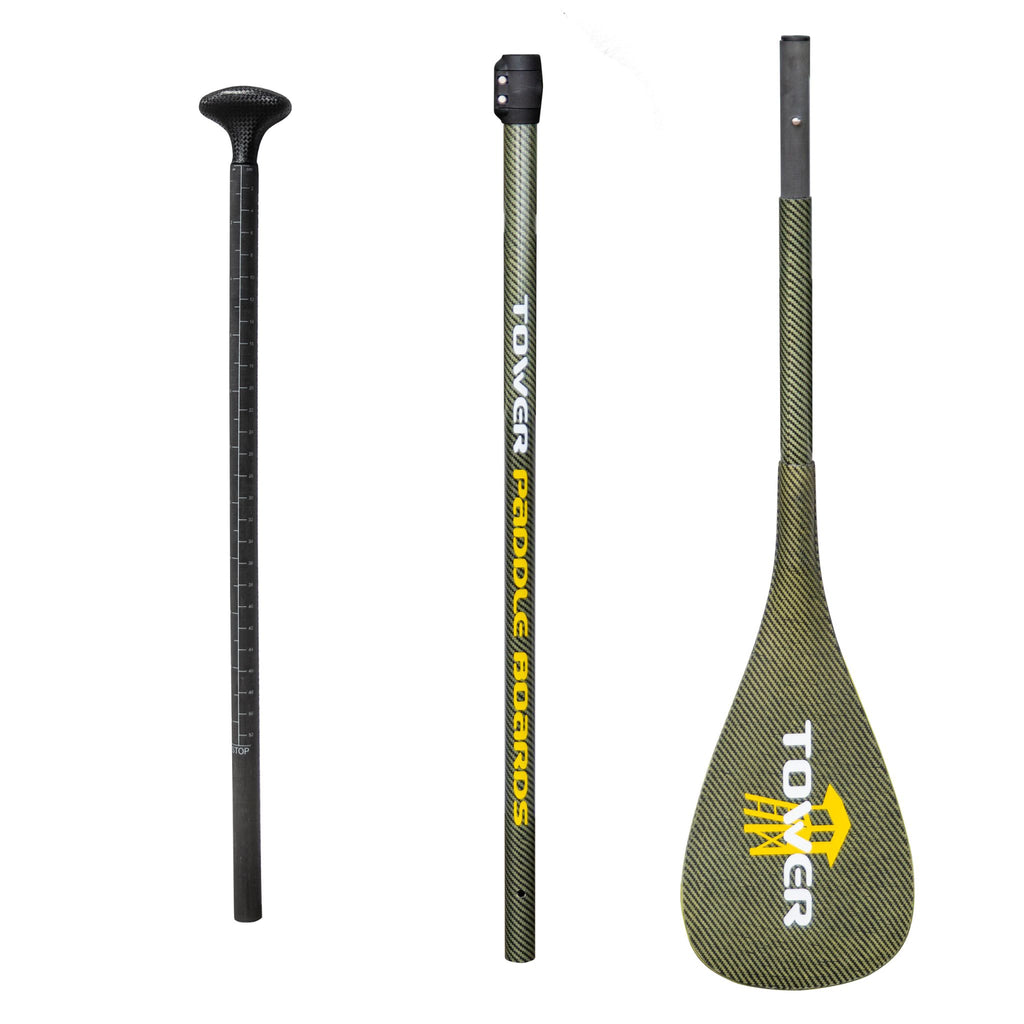
For gripping the paddle board paddle, you’re opposite hand of the side you are paddling on should be on the top paddle handle, and your inside hand should be palm facing in on the shaft of the paddle. You want long strokes to maximize efficiency, reaching as far forward as you can before darting the paddle into the water. As you pull the paddle back, you want to work it with the core of your body. Your arms should be fairly straight through-out the process. When you pull the paddle out of the water at the end of your stroke, you sort of drop you top hand towards the opposite side of the board and bring the paddle thru the air flatly to minimize wind resistance. The paddle should cut thru the air like a knife. You’ll see beginners doing this incorrectly and fighting against the wind with their paddle. The windier it is, the more you can feel the difference here. The paddle will be a straight shaft with a paddle that angles forward. You want the angle going forward, so the paddle has the ability to bend and recoil as you paddle it from front to back. Very frequently, beginners mistakenly paddle with the paddle angling backwards.
Alternating your Standup Paddle Stroke
Unless you’ve got a racing dedicated board (that typically have very pronounced V hulls), you’ll notice the direction of the board change with every stroke. By the time you’ve done five strokes on the right side of the board you’ll notice the direction you’re now heading is 15 degrees to the left. As such, you want to switch to the other side and do five strokes there. You alternate back and forth. Additionally, it helps minimize this if you lean out towards the side you are paddling on. Also, different boards track differently based on the different shapes of their bottom.
How to Turn Your Stand Up Paddle Board
If you just keep paddling on one side of the board you will follow a slow, rounded turning radius on most stand up paddle boards (with dedicated racing boards the exception). This is how most beginners turn. It’s slow and inefficient. Once you feel comfortable with your balance, you can make very quick turns by just walking back on your board. Position your outside foot (outside to the turn, but closest to the paddling side) back as far as you can in a sort of open parallel stance. You want to dig in the tail of the board and lift the front of the board while you are paddling and this allows you to easily swing the board around as you take short paddle strokes. Once you’re around the turn, just walk back forward to the standard parallel stance in the middle of the board.
Check out our more comprehensive primer on paddle boarding, what board types to consider, and SUP accessories you will need.